Showing posts with label Poetry and the Gods. Show all posts

Friday, November 18, 2016

URANUS


URANUS
"In Tartarus the Titans writhe, and beneath the fiery Aetna groan the children of Uranus and Gaea."
H.P. Lovecraft & Anna Helen Crofts, Poetry And the Gods

"And Ouranos came, bringing on night and longing forlove, and he lay about Gaia spreading himself full upon her. Then the son from his ambush stretched forth his left hand and in his right took the great long sickle with jagged teeth, and swiftly lopped off his own father's members and cast them away to fall behind him."
Hesiod, Theogony

"May the great wide bronze sky (ouranos) fall upon me from above, the fear of earth-born men."
Theognis, Fragment 1. 869

"OURANOS (Uranus) was the primordial god (protogenos) of the sky. The Greeks imagined the sky as a solid dome of brass, decorated with stars, whose edges descended to rest upon the outermost limits of the flat earth. Ouranos was the literal sky, just as his consort Gaia (Gaea) was the earth."

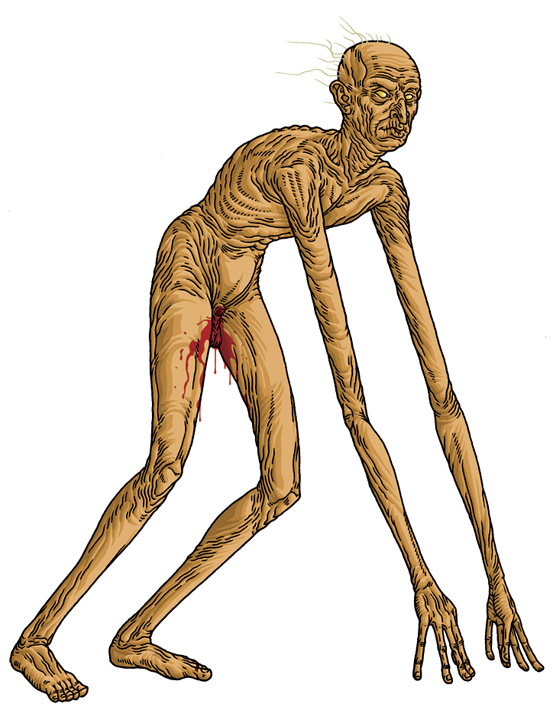
"Ouranos does not appear in early Greek art but Egyptian depictions of their sky-goddess Nut demonstrate how he was imagined--as a gigantic, star-spangled man with long arms and legs, resting on all fours, with his finger-tips in the far east, his toes in the far west, and his arching body raised to form the dome of the sky."
Aaron J. Atsma, The Theoi Project: Greek Mythology 


Thursday, February 5, 2015

PALLAS

PALLAS
“O Nymph more fair than the golden-haired sisters of Cyane or the sky-inhabiting Atlantides, beloved of Aphrodite and blessed of Pallas, thou hast indeed discovered the secret of the Gods, which lieth in beauty and song."
H.P. Lovecraft & Anna Helen Crofts, Poetry and the Gods

"Pallas was the Titan god of warcraft and the Greek campaign season of late spring and early summer. He was the father of Victory, Rivalry, Strength and Power by Styx (Hate), children who turned to the side of Zeus during the Titan-War. Pallas' name was derived from the Greek word pallô meaning "to brandish (a spear)."

"Pallas was clearly imagined as a goat-like god. In the story of the Titan-War, Athene vanquished him in battle, and crafted her stormy aigis (goat-skin) shield from his skin. His father and brothers were also apparently animalistic: Krios, named simply the Ram, was probably the constellation of the same name (Aries); Astraios, father of the horse-shaped wind-gods, may have been assine or equine; and Perses, father of Hekate, was perhaps dog-like god."
Aaron J. Atsma, The Theoi Project: Greek Mythology

Wednesday, February 4, 2015

GAEA

 GAEA
"The Gods are patient, and have slept long, but neither man nor giant shall defy the Gods forever. In Tartarus the Titans writhe, and beneath the fiery Aetna groan the children of Uranus and Gaea."
H.P. Lovecraft & Anna Helen Crofts, Poetry and the Gods


"Gaia (or Gaea) was the Protogenos (primeval divinity) of earth, one of the primal elements who first emerged at the dawn of creation, along with air, sea and sky. She was the great mother of all : the heavenly gods were descended from her union with Ouranos (the sky), the sea-gods from her union with Pontos (the sea), the Gigantes from her mating with Tartaros (the hell-pit) and mortal creatures were sprung or born from her earthy flesh."

"Gaia was depicted as a buxom, matronly woman, half risen from the earth in Greek vase painting. She was portrayed as inseparable  from her native element."
Aaron J. Atsma, The Theoi Project: Greek Mythology


Friday, September 20, 2013

DEIMOS


DEIMOS
"Ares and his train have gone forth with the madness of Gods, and have returned, Deimos and Phobos glutted with unnatural delight."
H.P. Lovecraft & Anna Helen Crofts, Poetry and the Gods 

"DEIMOS was the god  of fear, dread and terror, and his twin-brother PHOBOS of panic fear, flight and battlefield rout. They were sons of the god Ares, who accompanied their father into battle, driving his chariot and spreading fear in their wake."

"In classical art the two were usually represented as youths. Phobos was sometimes depicted with a lion or lion-like head."

Aaron J. Atsma, The Theoi Project: Greek Mythology

"Here Phobos and Ares there stirred up the hosts: hard after followed Deimos with slaughter's gore besprent, that in one host might men see, and be strong, in the other fear."
Quintus Smyrnaeus, Fall Of Troy

"From the outer gate wild Impetus leaps, and blind Nefas and Irae flushing red and pallid Deimos, and Insidia lurks with hidden sword, and Discordia holding a two-edged blade."
Statius, Thebaid

"Just before the entrance, even within the very jaws of Hades, Luctus and avenging Curae have set their bed; there pale Morbi dwell, sad Senectus, and Phobos, and Fames, temptress to sin, and loathly Egestas, shapes terrible to view." 
Virgil, Aeneid


Thursday, September 19, 2013

PHOBOS


PHOBOS
"Ares and his train have gone forth with the madness of Gods, and have returned, Deimos and Phobos glutted with unnatural delight."
H.P. Lovecraft & Anna Helen Crofts, Poetry and the Gods 

"DEIMOS was the god  of fear, dread and terror, and his twin-brother PHOBOS of panic fear, flight and battlefield rout. They were sons of the god Ares, who accompanied their father into battle, driving his chariot and spreading fear in their wake."

"In classical art the two were usually represented as youths. Phobos was sometimes depicted with a lion or lion-like head."

Aaron J. Atsma, The Theoi Project: Greek Mythology

"Here Phobos and Ares there stirred up the hosts: hard after followed Deimos with slaughter's gore besprent, that in one host might men see, and be strong, in the other fear."
Quintus Smyrnaeus, Fall Of Troy

"On the shield of Agamemnon is Phobos, whose head is a lion's."
 Pausanias, Description Of Greece

"Just before the entrance, even within the very jaws of Hades, Luctus and avenging Curae have set their bed; there pale Morbi dwell, sad Senectus, and Phobos, and Fames, temptress to sin, and loathly Egestas, shapes terrible to view." 
Virgil, Aeneid